
Anxiety Disorder
Alprazolam Side Effects: Short-Term, Long-Term Risks, and Safe Use Guide
Apr
| Buy Xanax Online | Visit Pharmacy |
| Buy Alprazolam Online | Visit Pharmacy |
| Email US Now | contact@buyalprazolamonlinee.us |
| Coupon For Discount | Sale10 ( Grab Your instant Disscount ) |
Introduction – Buy Xanax Online
Buy Alprazolam 1mg Online | Buy Alprazolam 2mg Online | Buy Xanax 1mg Online (Ksalol) | Buy Xanax 1mg Online (Rlam) | Buy Xanax 2mg Online
Alprazolam is widely used for managing anxiety and panic disorders, offering fast relief from symptoms that can otherwise feel overwhelming. As a benzodiazepine, it works by calming the central nervous system, making it highly effective for short-term symptom control. However, like all medications that affect brain chemistry, alprazolam comes with potential side effects that users should fully understand before starting or continuing treatment.
Many people focus only on the benefits, but understanding alprazolam side effects long term, as well as short-term reactions, is equally important for safe use. This comprehensive guide explains how alprazolam affects the body, what side effects to expect, when to seek help, and how to reduce risks while using it. It also connects with important related topics such as alprazolam dosage for anxiety and is alprazolam addictive, giving you a complete picture of this medication.
How Alprazolam Affects the Body
Alprazolam works by enhancing the activity of GABA, a neurotransmitter that slows down brain activity and promotes relaxation. This calming effect is what helps reduce anxiety and panic symptoms, but it also explains why side effects such as drowsiness and slowed thinking can occur.
Because alprazolam affects the central nervous system, its impact is not limited to mood alone. It can influence coordination, memory, alertness, and even breathing at higher doses or when combined with other substances. The intensity of these effects often depends on the dosage, frequency of use, and individual sensitivity.
Common Alprazolam Side Effects
In the early stages of use, many individuals experience mild to moderate side effects as the body adjusts to the medication. These are generally not dangerous but can affect daily functioning, especially during the first few days or weeks.
The most commonly reported side effects include a sense of drowsiness or sedation, which can make it difficult to stay alert during activities that require concentration. Dizziness is also frequently reported, particularly when standing up quickly or moving suddenly. Some individuals experience fatigue, reduced energy levels, or a general feeling of sluggishness that can impact productivity.
Other common effects include dry mouth, slight changes in appetite, and occasional difficulty focusing. While these symptoms are usually temporary, they should still be monitored, especially if they persist or worsen over time.
Cognitive and Behavioral Effects
Beyond physical symptoms, alprazolam can also affect cognitive and emotional functioning. Some users report difficulty concentrating, slower reaction times, and mild memory issues. These effects are often subtle but can become more noticeable with higher doses or prolonged use.
Behavioral changes may also occur in certain individuals. These can include irritability, mood swings, or a feeling of emotional dullness. In rare cases, paradoxical reactions such as increased anxiety or agitation may occur, particularly in sensitive individuals.
Serious Side Effects and Warning Signs
While most side effects are mild, there are situations where alprazolam can cause more serious reactions that require immediate attention. These include significant breathing difficulties, extreme drowsiness that interferes with waking, and severe confusion or disorientation.
Combining alprazolam with alcohol or other sedatives significantly increases the risk of these serious effects. This combination can slow breathing to dangerous levels and should always be avoided.
Any sudden or unusual changes in mood, such as severe depression or thoughts of self-harm, should also be taken seriously and addressed with medical support as soon as possible.
Alprazolam Side Effects Long Term
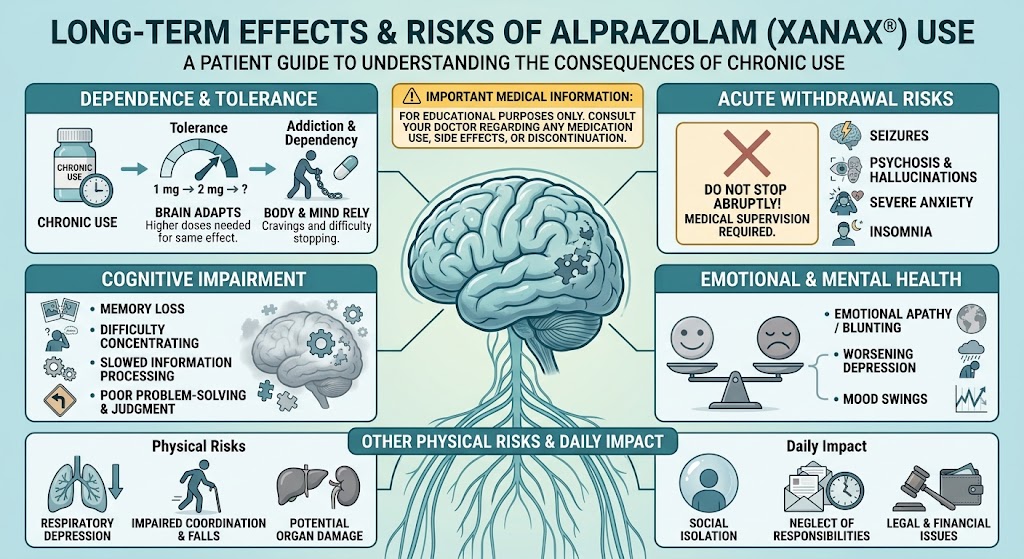
Understanding alprazolam side effects long term is essential for anyone using the medication beyond short-term treatment. Over time, the body can adapt to the presence of the drug, leading to tolerance. This means that the same dose may become less effective, prompting some individuals to increase their intake, which can raise the risk of further complications.
Long-term use is also associated with cognitive effects such as slower thinking, reduced memory performance, and decreased mental clarity. Some individuals describe a sense of emotional flattening, where feelings become less intense or less responsive.
Physical dependence is another significant concern. As the body becomes accustomed to alprazolam, stopping the medication suddenly can trigger withdrawal symptoms. This is closely related to the question is alprazolam addictive, as dependence is one of the key risks associated with extended use.
Is Alprazolam Addictive and How It Relates to Side Effects
A major concern surrounding alprazolam is its potential for addiction. Because it produces a calming and sometimes mildly euphoric effect, repeated use can lead to psychological and physical dependence. This risk increases with higher doses and longer durations of use.
Addiction does not happen to everyone, but it is a known possibility that should not be ignored. Signs may include needing higher doses to achieve the same effect, difficulty reducing use, and experiencing withdrawal symptoms when not taking the medication.
These risks are closely tied to long-term side effects, as dependence can make it harder to stop using the medication even when side effects become problematic.
Interaction-Related Side Effects
Alprazolam does not act in isolation, and its side effects can be amplified when combined with other substances. Alcohol is one of the most significant contributors to increased risk, as it enhances sedation and can impair breathing.
Other medications, including opioids, certain antidepressants, and sleep aids, can also interact with alprazolam. These interactions may increase drowsiness, reduce coordination, and raise the likelihood of serious complications.
Because of this, it is essential to inform a healthcare provider about all medications and supplements being taken.
Who Is at Higher Risk of Side Effects
Certain groups may be more sensitive to alprazolam and its side effects. Older adults, for example, often experience stronger sedative effects and may be at greater risk of falls or confusion. Individuals with liver issues may also process the medication more slowly, leading to prolonged effects.
People with a history of substance use disorders should approach alprazolam with caution, as they may be more susceptible to dependence. Similarly, those taking multiple medications should be aware of potential interactions that could increase side effect intensity.
How to Reduce the Risk of Side Effects
Minimizing side effects starts with proper usage. Following the prescribed alprazolam dosage for anxiety is one of the most important steps, as higher doses significantly increase the likelihood of adverse effects.
Taking the medication at consistent times each day, avoiding alcohol, and monitoring how the body responds can all contribute to safer use. It is also important to communicate openly with a healthcare provider about any unusual or persistent symptoms.
In some cases, lifestyle changes such as improved sleep, stress management, and therapy can reduce the need for higher doses, indirectly lowering the risk of side effects.
Withdrawal and Discontinuation Effects
When alprazolam is used regularly over a period of time, the body may become dependent on it. If the medication is stopped suddenly, withdrawal symptoms can occur. These may include increased anxiety, restlessness, difficulty sleeping, and physical discomfort.
In more severe cases, withdrawal can involve intense symptoms that require medical attention. This is why gradual tapering is recommended, allowing the body to adjust slowly as the dose is reduced.
Understanding withdrawal is important not only for safety but also for recognizing the broader context of is alprazolam addictive and how dependence develops.
Connection to Duration in the Body
Side effects can also be influenced by how long alprazolam stays in the system. Even after the noticeable calming effects wear off, the medication may still be present in the body, potentially interacting with other substances or contributing to lingering drowsiness.
Factors such as metabolism, age, and dosage all play a role in how long the drug remains active. This is why timing and consistency are important when taking alprazolam.
Frequently Asked Questions
What are the most common alprazolam side effects?
The most common side effects include drowsiness, dizziness, fatigue, and reduced concentration. These effects are usually mild and may improve as the body adjusts to the medication.
What are alprazolam side effects long term?
Long-term side effects may include cognitive slowing, memory issues, tolerance, and dependence. These risks increase with prolonged use and higher doses.
Is alprazolam addictive?
Yes, alprazolam can be addictive, particularly when used for extended periods or in higher amounts than prescribed.
Can side effects go away over time?
Many mild side effects improve as the body adapts, but long-term effects may persist if the medication is used for extended periods.
How can I reduce alprazolam side effects?
Following the correct dosage, avoiding alcohol, and maintaining regular communication with a healthcare provider can help reduce side effects.
Conclusion
Alprazolam can be highly effective for managing anxiety and panic disorders, but its benefits must be balanced against the potential for side effects. By understanding both short-term reactions and alprazolam side effects long term, individuals can make more informed decisions about their treatment.
Awareness, responsible use, and proper guidance are the keys to minimizing risks while maintaining effectiveness. When used carefully, alprazolam can remain a valuable tool, but it should always be approached with respect for its potency and potential impact on overall health.
